
GASIN ICT
Pollutions from NAOC Operations at Akala-Olu, Ahoada West, Rivers state.
Watch the video of the pollution that accompanies NAOC (Agip) operations at a host community, Akala-Olu in Ahoada West, Rivers state. This is what the people are exposed to in this area.
Ugandan CSO learns from the Executive Director of GASIN on Oil Issues
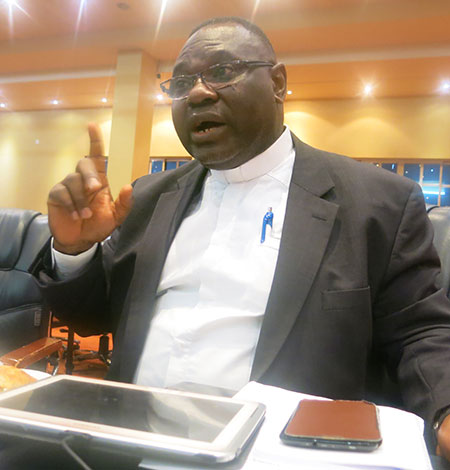
Rev Fr Dr Edward Obi is a Nigerian priest, born and now working in the Niger delta, where Nigeria’s oil is exploited.
He is the executive secretary of the Niger Delta Catholics Bishops Forum. The forum has been at the forefront of campaigning for good oil governance and inclusion of the host-communities of the Niger delta in the petroleum industry.
Recently, Dr Obi was invited to Kampala by Global Rights Alert (GRA), one of Uganda’s civil society organizations on oil and gas, and spoke on Nigeria’s oil journey. While in Uganda, Dr Obi told Edward Ssekika that so far, Uganda is on the right track with regard to the oil industry.
Whenever there is a discussion about the ‘oil curse, Nigeria is normally cited as an example. As religious leaders, what are you doing to reverse this and ensure oil benefits the ordinary people?
The Niger Delta Catholic Bishops Forum’s main task is to steer debate on the thorny issues of oil and gas in the delta. It became necessary to get the bishops involved because interventions and various efforts had faced a stalemate and there seemed to be no movement forward especially on the part of the church.
The bishops decided to come together and reignite their own interest in the issue. The story of oil in Nigeria is a long story. But there are certain key points that need to be noted. Oil was discovered in Nigeria over 60 years ago, actually in pre-independence.
At the eve of independence, the British already knew the concerns of the local people in regard to oil; so, the British actually set up a commission to try to address some of the fears of the minorities that live in the Niger delta. The British fell short of granting semi-autonomy to this area of Nigeria and simply indicated in their handover reports and in the first constitution that this area had to be treated in a special way due to its peculiarities.
The first problem we encountered was that oil was discovered when Nigerians were ill-prepared. We had no knowledge of what this was, no clear understanding of what we could do at the beginning and we didn’t even have the assistance of government to enable the people actually understand and be involved in the industry from the beginning.
As a result, oil was exploited for many years before people became aware of what was going on. When the people started getting aware of what was going on, government, actually military juntas that ruled Nigeria for many years, started to restrict them from getting involved in anything concerning oil.
Each of the military juntas saw oil as easy money that they could access. We had so much money and our problem was simply how to spend it. But the effect of the industry began to get to the people.
In 1978, the military administration of Gen Olusegun Obasanjo came up with a certain decree that dispossessed people of their land and gave all the land and all natural resources to the federal government of Nigeria. That Land Use Decree, a year later, was transformed into an act of parliament and it became the Land Use Act of 1979.
Now, by that stroke of a pen, all the local communities all over the country, but particularly in the areas where oil was being exploited, lost their land to government.
That meant that they could not negotiate directly with the oil companies.
Government made deals with oil companies and the companies simply moved in and started to exploit; whenever communities would ask, companies would say, ‘please, just discuss your issues with your government.’
So, that became a point of tension. This turned into pollution, loss of arable land as agriculture was downgraded in favour of the oil industry. When huge chunks of land were acquired for oil pipeline right of way, it meant ordinary communities could no longer farm and support themselves.
Were people compensated for the loss of their land?
No. If your land happened to be on the pipeline right of way or where any industry facility was to be set up, you would be thrown out without any compensation.
So, is the situation still the same today?
Actually the situation is still almost the same. The law has never been repealed; it is still in force. All of us Nigerians don’t own land as far as this act is concerned. We only get a certificate of occupancy and the government reserves the right to revoke that certificate of occupancy at any time.
For instance, if oil is discovered near your house, the government would simply revoke your certificate of occupancy of that piece of land in favour of the industry but currently with some meagre compensation.
So, communities have been evicted because of this law. It is a very unjust law. Efforts have been made by many civil society organizations to review that law but as far as I know, the efforts have not yet yielded results.
And what has the government done?
There are several joint ventures involving different oil companies and different percentages of equity between government and the oil companies. Now, if a government is a business partner with an oil company, its interest tilts in favour of the oil company. So, government negated its responsibility to protect the people.
It could not play a regulatory role because you can’t be a regulator and player in the same business at the same time. That is why the oil industry as such doesn’t seem to benefit ordinary people at all.
We, as religious leaders, consider this as an issue of justice, and the Catholic Church in particular we have a preferential option for the poor. We are actually taking side with the poor in the oil-producing areas whose lives have been changed by the industry.
What role are you actually playing?
We want dialogue to occur so that all sides, the communities, government agencies and the oil companies can come together and see how to resolve some of these sticky issues.
What has changed in Ogoni and Niger delta in general, after the 1995 death of Ken Saro-Wiwa and the other Ogoni chiefs?
What the killings of Saro-Wiwa and others did actually was to bring the story of the Ogoni suffering and pollution to the public forum. People have become more interested and are no longer as naïve as they were. They are now taking steps, suing companies, government and other collaborators.
As a coalition, we have come in one case at least in Bodo in Ogoniland and we have got Shell to sit around with the communities. Right now, we are negotiating for compensation. There has been a steady understanding by ordinary people of issues concerning their rights in relation to the oil industry.
For a long time, the government of Nigeria was playing an ostrich, pretending that there was no problem but because people are now aware, government can no longer pretend.
What is Uganda doing right or wrong in as far the industry is concerned and what lesson can we learn from Nigeria?
You [Uganda] have had the opportunity to learn from the mistakes that were made in Nigeria and other places. So, the chances of Ugandans repeating those mistakes are probably limited. Uganda at least has had discussions with many stakeholders about the industry.
One thing that Uganda can do is expand the value chain of oil in such a way that there are industries that ordinary people can engage in, for instance, the footwear industry that can be developed from the byproducts of oil refining.
That way, you enlarge the value chain and include many people. Also, the oil companies can help local farmers to rear things like chicken so that all the chicken that is consumed by thousands of oil workers is supplied by local people.
Uganda is currently crafting the revenue sharing and management model. Any lessons Uganda can learn from Nigeria?
As far as I know, all revenues go to the federal government of Nigeria, but in the new Petroleum Bill that has not yet been passed, there is a proposal to give 10 per cent of the profits back to the host communities through the Host Communities Fund.
I think, in such a business, the government should disengage from doing business with oil companies. The worst model of revenue sharing is a model that excludes the ordinary people because now people are wiser than they were 40 years ago.
There have been problems with compensations in Uganda and people getting evicted without compensations. Isn’t Uganda courting trouble?
First of all, we need to understand what the real compensation is. Compensation is not the value of the piece of land that you give up at today’s value. You must factor in its present cost value, the gains that the individual who owns the land would have made over fifty years or so and other factors and that is how compensation is supposed to be calculated.
This email address is being protected from spambots. You need JavaScript enabled to view it.This email address is being protected from spambots. You need JavaScript enabled to view it.
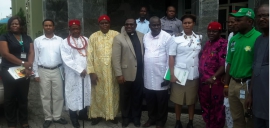
GASIN Partners with NODSRA to Organize Stakeholders Workshop
GASIN in partnership with the National Oil Spill Detection and response Agency (NOSDRA) organized a Stakeholder’s Joint Workshop on the theme “Creating and Improving Linkages between Communities, Government Regulatory Agencies and the Oil and Gas Operators.” The communities in focus are the four communities in ONELGA: Obrikom, Mgbede, Okwuizi and Aggah, where GASIN has a Gas Alert Project ongoing.
 The workshop was graced by the media and complete representatives of the stakeholders of the facilities in these communities. The regulators present were the NOSDRA, Department of Petroleum Resources (DPR), Rivers state Ministry of Environment (RSMOE) and the National Environmental Standards, Regulation and Enforcement Agency (NESREA). The oil and gas company that attended was the Nigeria Agip Oil Company Limited (NAOC), which is the major operator of the facilities in the communities in question. The communities were represented by their respective Paramount Rulers, Community Development Committee (CDC) Chairmen, Women Leaders, Youth Presidents and GASIN’s Gas Monitoring Group (GMG) leaders.
Keynote addresses and goodwill speeches were presented by all the regulators present, and the communities made presentations on pressing issues that affect them with regard to the oil and gas exploitation activities in their respective communities. The issues raised by the communities cut across environmental and health effects, corporate social responsibility (CSR), oil theft and sabotage.
 The presentations were followed by very serious discussions, questions and answers by the stakeholders present on the way forward. A communique was raised and signed at the end of workshop.
Commenting on the workshop, all the participants commended the GASIN-NOSDRA partnership for the initiative. GASIN, headed by Rev. Fr. (Dr.) Edward Obi, who also doubles as the National Coordinator of NACGOND, was very much applauded by all, including NOSDRA, for their uncommon commitment to proffering and facilitating sustainable solutions to the lingering challenges encountered in the course of oil and gas exploitation in the communities. Everone at the workshop hopes that the partnership will continue and workshops of this kind will be frequently organized so as to address the pressing issues raised.
Aggah GMG Members
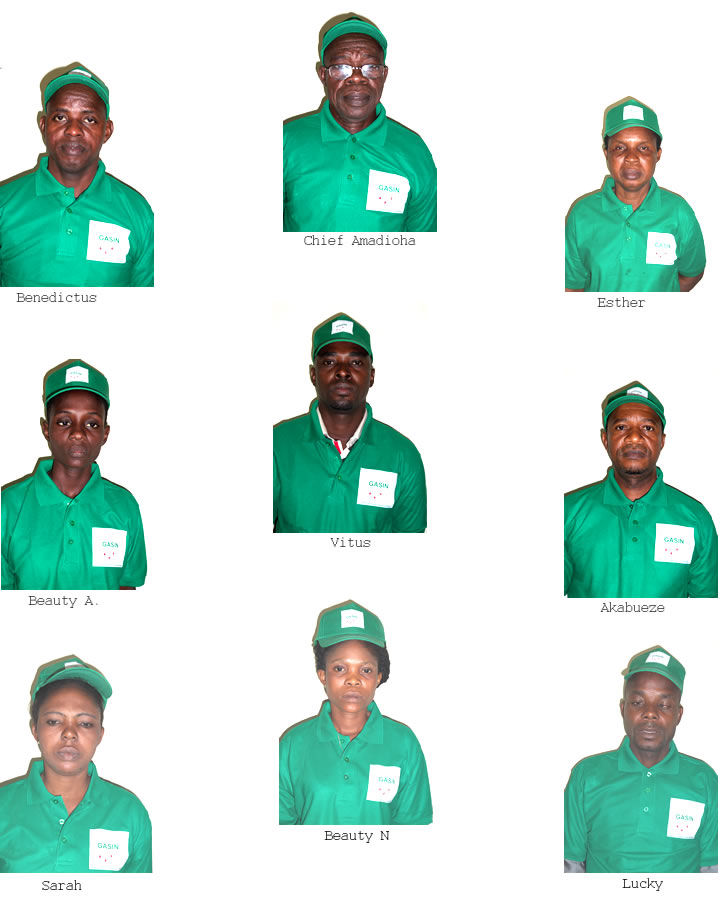
Obrikom GMG Members
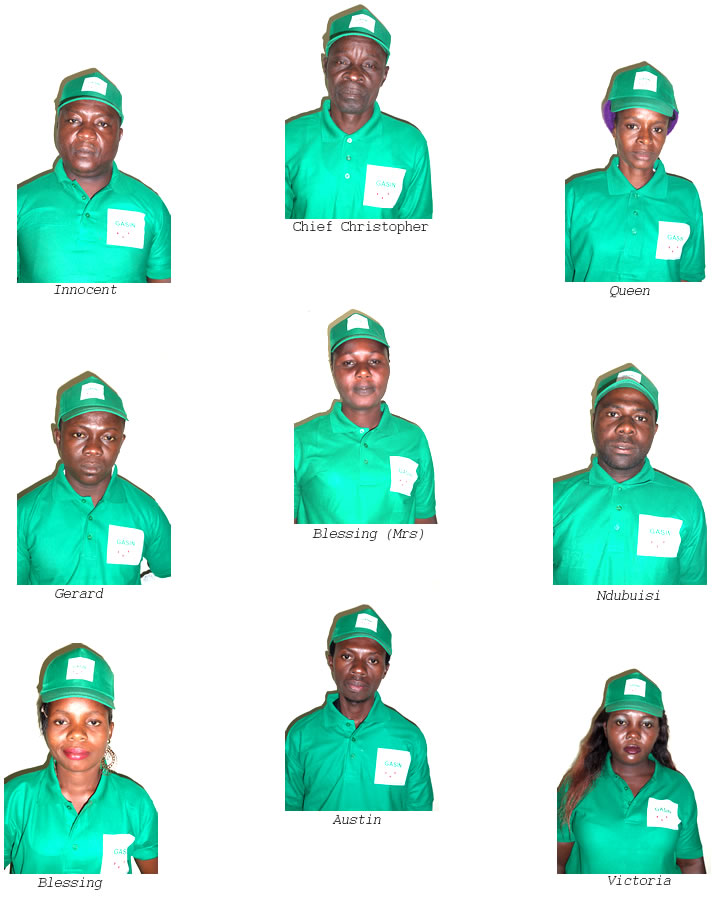
Okwuizi GMG Members
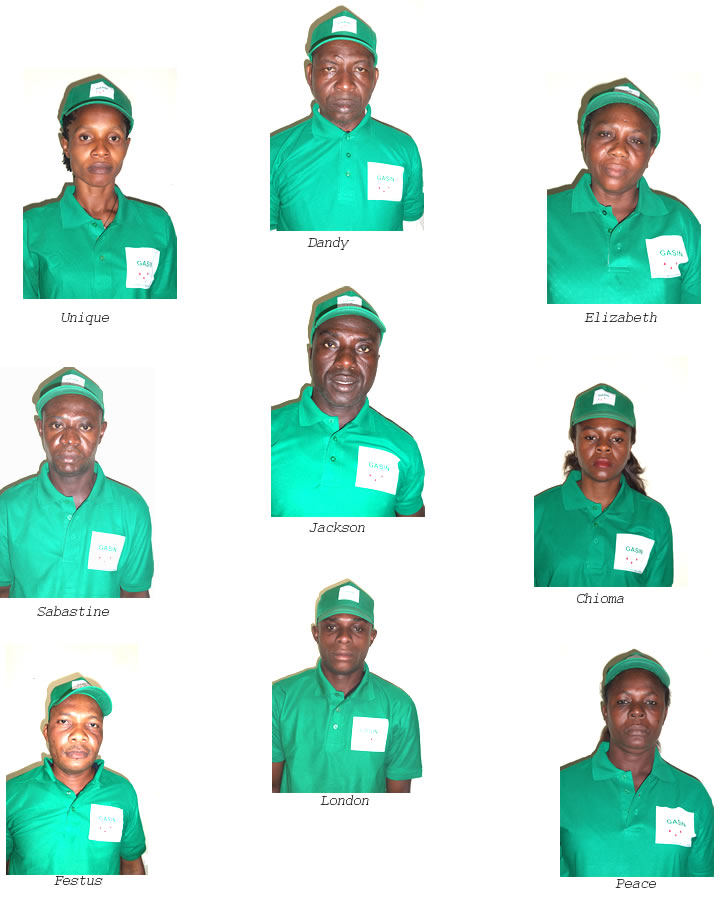
Obunagha GMG Members

Koroama GMG Members

Polaku GMG Members
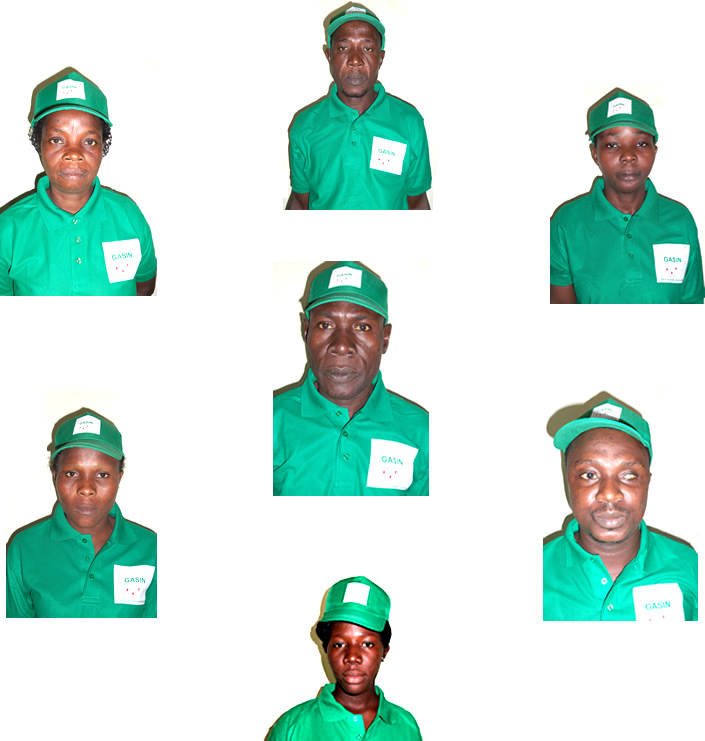
Gas Alert System
Gas Alert System is a system whereby a community-based group called the Gas Monitoring Group (GMG) inaugurated by GASIN, documents and reports incidents or accidents related to natural gas exploitation activities, for timely response by the operating companies and regulatory agencies.
The overall objective is to maintain a safe environment and secure livelihoods in these areas that host gas facilities. This system is an initiative of GASIN and independently sponsored by GASIN.
Thus, the organisation follows up all GMG reports to ensure appropriate mitigations measures are deployed without any need for violence. Hence, GASIN's lobby and advocacy approaches remain peaceful and respectful in order to engender peace among the stakeholders of the growing gas regime.
The information gathered by the GMGs are communicated simultaneously to the operators, the regulators and GASIN through dedicated phone lines. GASIN staff would then visit the sites to validate incident reports and follow up the operators and regulators respectively.
Internally, GASIN documents the responses of each stakeholder, and maintains external advocacy, in collaboration with the community representatives, until the incident is fully resolved.
Community reps then return to inform their people on what happened and how it was resolved, including any lessons that may be learned from the incident.
GASIN sees an important value in bringing about this sense of responsibility and ownership in the communities, because, in this participatory approach, all stakeholders, including communities, operators and regulators, work together for the common good of preventing accidents and incidents.
The volunteers (GMGs) from six of Our Target Communities have been selected by the communities' respective focus groups, trained by GASIN on various areas including negotiation skills, HSE, EIA, reporting and documentation, and now have the extra responsibility to submit valid reports on gas issues to other stakeholders for the accomplishment of the overall objective of the Gas Alert System. More communities will be included in this system in the future.